Medicine Schools and Programs in Canada
5 schools in Canada teach Medicine.

McGill University
University Montreal, Canada In an official register
McGill University is a public university in Montreal, Quebec, founded in 1821. Its main downtown campus is at 845 Sherbrooke Street West, and the university also has the Macdonald campus. International students from more than 150 countries make up nearly 30% of the student…
Queen's University
University Kingston, Canada In an official register
Queen's University is a research university in Kingston, Ontario, Canada, established in 1841. It is a member of the U15 group of Canadian research universities, and it also runs Bader College, a campus at Herstmonceux Castle in East Sussex, United Kingdom. Students come from…
University of British Columbia (UBC)
University Vancouver, Canada In an official register
The University of British Columbia (UBC) is a public university in the Canadian province of British Columbia, with two main campuses: one in Vancouver and one in the Okanagan. UBC dates its history back to 1915. It has 20,662 faculty and staff and over 435,000 alumni in 145…
University of Calgary
University Calgary, Canada In an official register
The University of Calgary (UCalgary) is a public post-secondary institution in Calgary, Alberta, the fourth-largest city in Canada. It was founded in 1966, with origins in the early 1900s, and describes itself as Canada's Entrepreneurial University. It has more than 38,000…
University of Manitoba
University Winnipeg, Canada In an official register
Canada’s University of Manitoba, located in the Province of the same name, has, for more than 135 years, delivered life-changing learning experiences for its students, has conducted world-class research and shared their knowledge and discovery to shape the province, the…
Medicine Studies in Canada
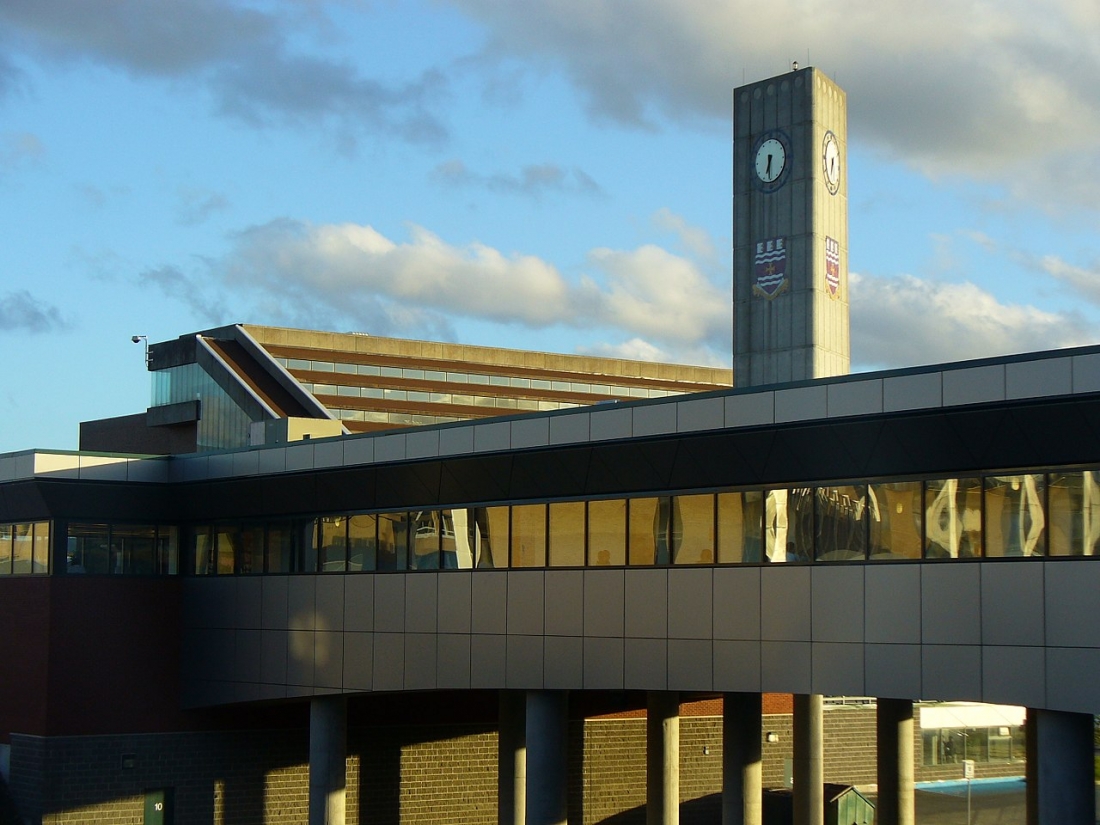 The Memorial University offers medicine studies in Canada.
In Canada, medicine is taught by university faculties of medicine and leads to the degree of Doctor of Medicine (MD). It is not a programme that students enter straight from secondary school: applicants need previous university study, and most places are reserved for Canadian citizens and permanent residents. The Association of Faculties of Medicine of Canada (AFMC) states that it represents the country's 19 faculties of medicine.
SpainExchange lists 5 universities in Canada with medicine programmes: Queen's University in Kingston, the University of British Columbia (UBC) in Vancouver, McGill University in Montreal, the University of Calgary and the University of Manitoba in Winnipeg. An international applicant should check each faculty's eligibility rules before anything else, because several do not admit students who need a study permit.
How the medical degree is organised
The MD is usually a four-year programme. The University of Manitoba describes a four-year MD organised into Pre-Clerkship (Years 1 and 2), based on the foundations of medicine, and Clerkship (Years 3 and 4), based on clinical rotations. McGill University offers a four-year programme that leads to the MDCM degree, its historical name for the medical degree. Queen's University offers three MD programme options, including a four-year general MD in Kingston.
Medical programmes are accredited by the Committee on Accreditation of Canadian Medical Schools (CACMS), which checks that programmes leading to the MD meet national standards of educational quality.
The MD alone does not allow a graduate to practise independently. Graduates continue with postgraduate training (residency) in a specialty or in family medicine. Places are allocated through the Canadian Resident Matching Service (CaRMS), which matches students into postgraduate medical training programmes throughout Canada. According to the University of Manitoba, this stage lasts from two to six years depending on the career path.
Admission and language
Each faculty sets its own requirements, and they differ considerably:
- University of Manitoba: a completed bachelor's degree with a minimum adjusted grade point average of 3.30, the Medical College Admission Test (MCAT) and the Casper situational judgement test. The university describes admission as highly competitive, with 140 seats each year.
- University of Calgary: at least two full-time years of post-secondary education at the time of application. The programme accepts Canadian citizens, permanent residents and people with refugee status in Canada, and states that it does not accept international students.
- McGill University: the number of places is regulated by the provincial government by category of applicant. In the list published by the faculty, the international category, for applicants who need a study permit, has 1 seat, and international medical graduates have up to 2 seats.
Medicine is taught in English or French depending on the university. At McGill, courses are given in English at the Montreal campus and in French at the Outaouais campus, and clinical placements take place at bilingual or francophone teaching sites.
Licensing and recognition
Licences to practise are granted by the medical regulatory authority of each province or territory, and each one sets its own requirements. The Medical Council of Canada (MCC) describes a common reference, the Canadian Standard: an acceptable medical degree, the Licentiate of the Medical Council of Canada (LMCC), completed postgraduate training, and certification from the College of Family Physicians of Canada, the Royal College of Physicians and Surgeons of Canada or the Collège des médecins du Québec.
To obtain the LMCC, a graduate of a CACMS-accredited school must pass the MCC Qualifying Examination (MCCQE). Doctors who trained in another country follow a separate route: the MCC publishes pathways for international medical graduates and internationally trained physicians.
Study permit and costs
Most foreign nationals need a study permit to study in Canada. The student must be enrolled at a designated learning institution (DLI) and prove that there is enough money for tuition fees, living expenses and return transportation. The application fee is CAN$150 (Government of Canada, checked October 2026).
Tuition fees for medicine are set by each university and are not published as a national figure. For living costs, EduCanada, the Government of Canada's study portal, advises budgeting a minimum of CAN$23,000 per year in addition to tuition (2026).
Careers
After residency and certification, doctors work as family physicians or as specialists in hospitals, clinics, universities and public health services. Because licences are provincial, a doctor who moves to another province has to check the requirements of the regulatory authority there.
Frequently asked questions
How long does it take to become a doctor in Canada?
The MD usually takes four years after previous university study. Residency follows and, according to the University of Manitoba, lasts from two to six years depending on the specialty.
Can international students study medicine in Canada?
Only in a few cases. The University of Calgary states that it does not accept international students, and McGill University lists 1 seat for applicants who need a study permit. Each faculty publishes its own applicant categories.
Is the MCAT required?
It depends on the faculty. The University of Manitoba requires the MCAT and the Casper test; other faculties publish their own requirements.
Can a doctor trained abroad work in Canada?
There are specific pathways for international medical graduates, described by the Medical Council of Canada. The licence itself is granted by the regulatory authority of the province or territory.